


Why UAE Power Outages Are Uniquely Dangerous for Indoor Plants
Power outages happen everywhere in the world — but in the UAE, they carry a specific threat to indoor plants that does not exist in most other countries. In temperate climates, a power outage means no heating in winter — a manageable inconvenience for indoor plants that tolerate cool temperatures. In the UAE, a power outage during summer means no air conditioning — and the consequences for sealed apartments are severe.
Without AC running in a sealed UAE apartment during June through September, indoor temperatures rise rapidly as the building absorbs the intense external heat. Studies of sealed UAE apartment buildings during summer AC failures have recorded indoor temperatures reaching 38–45°C within 2–4 hours of AC stoppage — conditions that constitute genuine heat stress for virtually every tropical indoor plant commonly kept in UAE homes.
The irony is significant: AC is what makes UAE indoor plant keeping possible, by maintaining the cool, stable temperatures that tropical plants need. The same system that creates the dry air problems UAE plant owners constantly manage is also the system that prevents heat stress from destroying the entire collection during its absence.
Understanding this specific vulnerability — and preparing appropriately — is the foundation of power outage plant protection in UAE homes.
What Happens to Indoor Plants in Extreme Heat
Different plants respond to sudden heat exposure at different rates and thresholds — but the underlying mechanism is the same across all species.
When temperatures rise rapidly above a plant's comfort range, the plant increases transpiration — releasing water vapour through its leaves at an accelerating rate to cool itself through evaporative cooling, the same mechanism that makes sweating effective for humans. This rapid water loss outpaces what the root system can replace from the soil, causing the plant to enter moisture stress even when soil moisture is adequate. Leaves begin wilting and drooping within hours as cell turgor pressure drops. If the heat continues, cell proteins begin denaturing — permanent cellular damage that manifests as scorched, brown, or papery leaves that do not recover even when temperatures normalise.
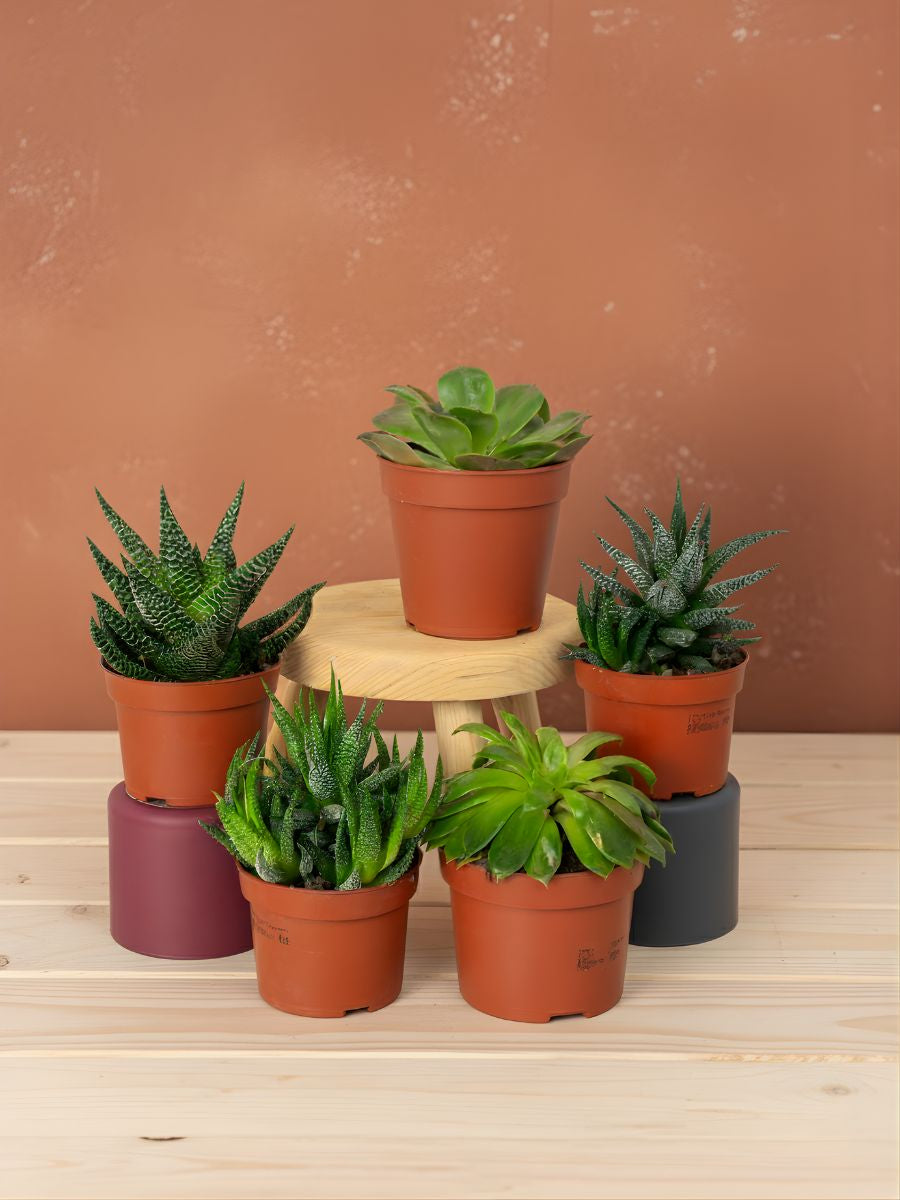
The plants most vulnerable to UAE power outage heat stress are those with the thinnest, most delicate leaves and the highest humidity requirements — Calatheas, Boston Ferns, Peace Lilies, and Maidenhair Ferns. The most resilient are desert-adapted succulents, cacti, Snake Plants, and ZZ Plants that evolved in exactly the hot, dry conditions that a UAE apartment without AC creates.
Before the Power Outage — Preparation That Makes the Difference
The most effective power outage plant protection happens before the outage occurs. In UAE homes, where summer power outages are a known possibility due to grid load during peak AC demand, basic preparation can be done in advance and maintained throughout the summer season.
Identify your most vulnerable plants. Know which plants in your collection are most heat-sensitive — Calatheas, Ferns, Peace Lilies, Orchids — and which are most resilient — Snake Plants, ZZ Plants, Aloe Vera, Pothos, Succulents. During an outage, your limited intervention energy should go to the vulnerable plants first.
Keep distilled water or AC condensate stored. Maintain a supply of distilled water or collected AC condensate in bottles at room temperature. During a power outage, having clean water immediately available without needing to prepare it saves critical response time.
Know your window options. In UAE summer, opening windows during the day brings in dangerously hot outdoor air — counterproductive. However, knowing which windows face away from direct sun and whether there is any shade structure outside (balcony overhangs, tinted glass, external blinds) helps you make informed decisions about ventilation if the outage is extended.
Identify your coolest room. In most UAE apartments, interior bathrooms or north-facing rooms stay cooler longer during power outages than south or west-facing rooms with large windows. Knowing this room in advance allows rapid plant relocation if needed.
During the Power Outage — Immediate Response Steps
The moment a power outage occurs during UAE summer, the clock starts. Here is the priority response sequence:
Step 1 — Move the most vulnerable plants immediately. Relocate heat-sensitive plants — Calatheas, Ferns, Peace Lilies — to the coolest available room in the apartment. Interior rooms away from external walls, particularly north-facing spaces and bathrooms, maintain lower temperatures longest during outages.
Step 2 — Close all curtains and blinds immediately. This is the single most effective immediate action available. Closing curtains — particularly on south and west-facing windows — blocks radiant solar heat from entering through the glass. A well-curtained apartment stays significantly cooler for longer than one with open blinds during a summer power outage.
Step 3 — Water heat-sensitive plants immediately. Moist soil stays cooler than dry soil and provides more water for the increased transpiration that heat stress drives. Water all vulnerable plants thoroughly immediately after the power goes out — do not wait until they show visible wilting. Use room-temperature distilled water — cold water creates thermal shock on already-stressed roots.
Step 4 — Mist leaves of heat-sensitive plants. For Calatheas, Ferns, and Peace Lilies, misting the leaves directly with room-temperature water provides immediate surface cooling through evaporation. During a power outage, the usual caveat about evening misting and fungal risk is less relevant than the immediate heat protection benefit — mist generously and repeat every 30–45 minutes if the outage continues.
Step 5 — Group all plants together in the coolest room. Move every plant you can into the coolest available room and cluster them tightly together. The combined transpiration of grouped plants raises local humidity slightly — providing a modest microclimate benefit that reduces individual plant stress.
Step 6 — Do not open windows during daylight hours in UAE summer. Outdoor air during UAE summer daytime is dramatically hotter than indoor air even during a power outage — opening windows accelerates temperature rise rather than reducing it. The exception is early morning hours (before 6am) or late evening (after 8pm) when outdoor temperatures drop significantly — ventilating during these windows can help remove accumulated heat.
Step 7 — Cover extremely sensitive plants. For the most heat-sensitive plants — rare Calatheas, Maidenhair Ferns, Orchids — placing a slightly damp cloth loosely over the plant or covering with a clear plastic bag creates a localised high-humidity microenvironment that significantly reduces moisture loss from the leaves during the critical first hours of high-temperature exposure.
Extended Outages — What to Do After 4+ Hours
If the power outage extends beyond four hours during UAE peak summer, more significant intervention may be needed.
Consider ice. Placing bags of ice or frozen water bottles in the room with your most vulnerable plants — not touching the plants directly — creates a localised cooling effect as the ice melts. This is a last-resort measure but genuinely effective during extended outages.
Battery-powered fans. A battery-powered fan directed across your plant collection reduces the ambient temperature the plants experience through air movement and helps manage the humidity the grouped, transpiring plants create. This also prevents the static, hot air conditions that accelerate leaf damage.
Check on recovering plants every hour. During an extended outage, check each plant's leaf condition every 60 minutes. Wilting that recovers when you mist and returns to upright posture within 30 minutes is manageable stress. Wilting that does not recover after misting — or leaves that feel dry and papery rather than simply limp — indicates more serious heat damage.
After Power Is Restored — Recovery Care
When AC power is restored, resist the instinct to immediately blast the AC to maximum cold — the rapid temperature drop from very hot to very cold can itself stress already heat-compromised plants through thermal shock.
Set AC to 26–27°C initially and allow it to cool gradually over 1–2 hours rather than dropping temperature immediately to the standard setting.
After the apartment returns to normal temperature, assess each plant:
Wilted but otherwise intact leaves — water thoroughly and allow the plant to recover over 24–48 hours. Most plants that experienced temporary wilting without leaf damage recover completely.
Brown, scorched, or papery leaf patches — this is permanent heat damage in the affected tissue. Trim cleanly with sterilised scissors and allow the plant to produce healthy replacement growth going forward. Do not fertilise for 2–4 weeks after heat stress — damaged plants cannot efficiently process nutrients during recovery.
Complete leaf collapse with no recovery after rehydration — severe heat damage. Remove all collapsed foliage, check the root system for any rot that may have developed from emergency overwatering, and provide optimal recovery conditions — moderate indirect light, correct watering, and adequate humidity — for several weeks while the plant rebuilds.
Plant Resilience Ranking for UAE Power Outages
| Plant | Heat Tolerance | Outage Risk |
|---|---|---|
| Cactus and Succulents | Excellent | Very Low |
| Aloe Vera | Excellent | Very Low |
| Snake Plant | Very Good | Low |
| ZZ Plant | Good | Low-Moderate |
| Pothos | Good | Moderate |
| Peace Lily | Moderate | Moderate-High |
| Spider Plant | Moderate | Moderate |
| Calathea | Poor | High |
| Boston Fern | Poor | High |
| Maidenhair Fern | Very Poor | Very High |
| Orchid | Poor | High |
The Longer-Term Lesson — Build a Power-Outage-Resilient Collection
For UAE plant owners in buildings or areas that experience occasional power outages, the most sustainable response is building a collection that is resilient by design. A collection anchored by drought-tolerant, heat-resistant plants — Snake Plants, ZZ Plants, Succulents, Aloe Vera, Pothos — with only a small number of high-maintenance heat-sensitive specimens creates a collection that survives most UAE outage events with minimal damage and minimal emergency intervention.
Reserve the more demanding plants — Calatheas, Ferns, rare tropical aroids — for rooms with battery backup, buildings with generator systems, or accept that these plants carry outage risk in UAE conditions.
🌿 Browse GrowHub's full indoor plants collection — including the most heat-resilient indoor plants for UAE homes, delivered across Dubai and Abu Dhabi.
🪨 Shop pebbles for humidity trays — an essential part of every UAE indoor plant setup, particularly during power outage emergencies.


