


Why Dubai Is Particularly Hostile to English Ivy
The English Ivy (Hedera helix) evolved in the cool, moist woodlands and hedgerows of Europe — environments characterised by moderate temperatures, consistently humid air, and dappled natural light. It thrives in conditions that are almost the exact opposite of a Dubai apartment.
Consider the mismatch: English Ivy prefers moderate to high humidity, ideally between 40–60%. Dubai AC apartments routinely drop indoor humidity to 20–30%. English Ivy grows best in cool to moderate temperatures between 10–24°C. Dubai's sealed, AC-cooled interiors sit at 22–26°C — manageable, but on the warmer end of the plant's preference. English Ivy is particularly vulnerable to dry air from air conditioning, which is the default condition in Dubai homes for 10–12 months of the year.
The result is a plant that looks spectacular in the nursery and begins declining within days of arriving in a typical Dubai apartment. The good news is that the decline is entirely preventable — once you understand what is actually causing it.
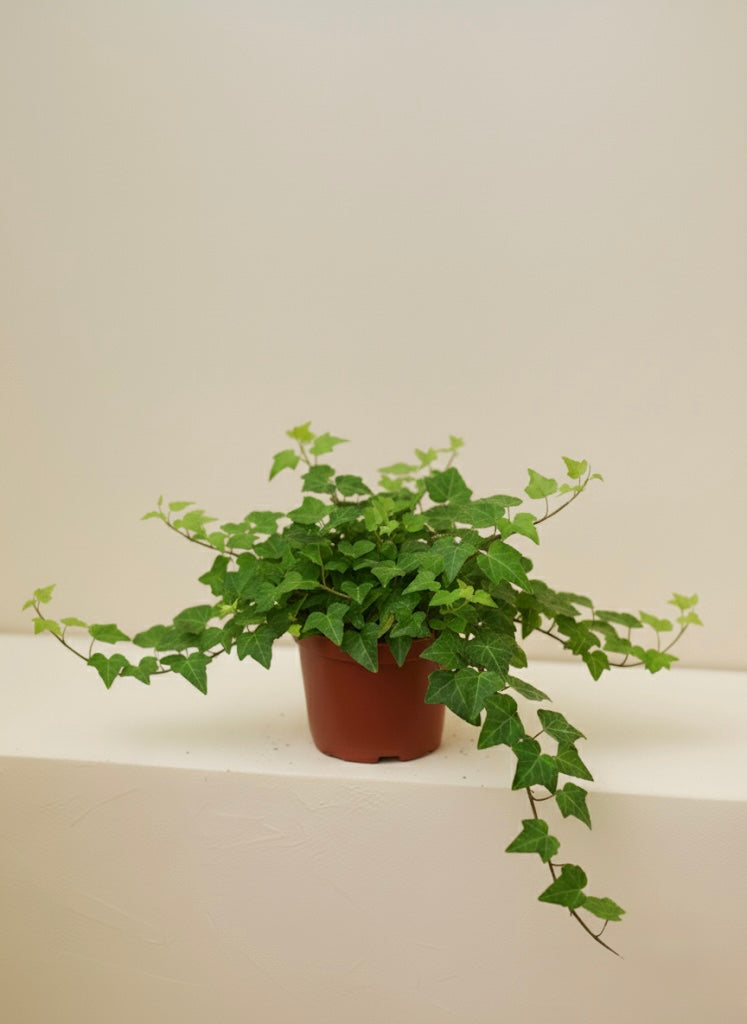
The Secret — Humidity Is Everything
If there is one secret to keeping English Ivy alive in Dubai, it is humidity management. Dry air is one of its biggest enemies indoors — and Dubai's AC environment makes dry air the permanent, year-round indoor default.
When humidity drops below 40% — which happens constantly in Dubai apartments — English Ivy begins showing stress in a very specific progression. First, the leaf tips turn brown and crispy. Then the edges follow. Then the plant begins dropping leaves. Finally, it becomes severely weakened and vulnerable to the spider mite infestations that are particularly common in Dubai's dry AC air. A stressed plant is a susceptible plant.
Here is how to provide adequate humidity in Dubai conditions:
Pebble humidity tray — the essential first step. Add pebbles to a saucer, then add water. Set your ivy on the pebbles — the water will evaporate, raising the humidity around the plant continuously. Use pebbles from GrowHub's gravel and pebbles collection for the most effective and visually attractive setup. Fill the tray with distilled water or collected AC condensate rather than UAE tap water — the minerals in tap water leave white deposits on pebbles and can damage the ivy's root system over time.
Room humidifier — the most effective solution. A cool-mist humidifier placed 1–1.5 metres from your English Ivy and running 6–8 hours daily maintains consistent 40–50% humidity regardless of how hard the AC runs. This is the single most impactful investment for keeping English Ivy alive in Dubai. Fill with distilled water — UAE tap water in a humidifier deposits mineral film on surrounding surfaces and the ivy's leaves.
Bathroom placement. A bright bathroom — with a frosted or small window providing indirect light — is genuinely one of the best positions for English Ivy in a Dubai apartment. Daily shower steam raises humidity significantly and consistently, creating conditions closer to the ivy's native European woodland habitat than anywhere else in the home.
Plant grouping. Cluster your English Ivy with other plants — the collective transpiration creates a localised humidity microclimate that benefits all plants in the group. Position away from AC vents to prevent the microclimate from dispersing.
The Second Secret — Keep It Away From AC Vents
The second most important factor that Dubai plant guides miss: English Ivy placed near an active AC vent deteriorates faster than almost any other indoor plant. The constant cold, dry airflow from vents desiccates the delicate leaves rapidly — causing brown tips and edges to appear within days regardless of how good your humidity management is elsewhere.
Check every potential position for your English Ivy relative to all active AC vents in the room. Cold air sinks and travels along walls — a vent several metres away can still direct damaging airflow across a floor-level hanging basket. Maintain at least 1.5–2 metres of distance from any active AC vent, and during UAE peak summer when vents run at maximum capacity, check this distance again as airflow patterns intensify.
Watering — The Soak and Dry Method Works
The most common cause of ivy failure is overwatering — and in Dubai's AC-cooled apartments where soil dries slowly, this risk is amplified significantly. Crispy brown leaves indicate low humidity or underwatering — but soggy, dropping leaves indicate overwatering, a condition that causes more English Ivy deaths in Dubai than any other single factor.
Water ivies thoroughly, then let the soil dry to the touch at approximately 1–2cm depth before watering again. In Dubai AC conditions, this typically means watering every 7–10 days in summer and every 10–14 days in winter. Always use distilled water, RO-filtered water, or collected AC condensate — UAE tap water's fluoride and mineral salts cause progressive root damage that manifests as leaf browning that no amount of humidity management will fix if the water quality issue is not addressed simultaneously.
Empty the saucer of any excess water within 10–15 minutes of watering — never allow English Ivy to sit in standing water.
Light — Bright Indirect Is the Sweet Spot
English Ivy grows best in bright indirect light. In Dubai, this means near an east or north-facing window — bright enough for the plant to produce dense, lush growth, but protected from the intense direct UAE sun that scorches the delicate leaves. Most cultivars of ivy grow best in bright light but not direct sun, as foliage will burn.
Variegated English Ivy varieties — those with white or cream leaf margins — need slightly more light than solid green varieties to maintain their colour. Placed in too-dim positions, the variegation fades and the leaves revert toward solid green. A north-facing window with supplemental LED grow lighting provides an excellent position for variegated varieties in Dubai apartments with limited natural light.
Avoid placing English Ivy directly beside windows that receive afternoon UAE sun during summer — the combination of direct light and heat through glass during June through September significantly exceeds what this plant can tolerate.
The Spider Mite Threat — Prevention Is Everything
English Ivy and spider mites have a specific relationship that is directly relevant to Dubai. Spider mites love warm and dry conditions — precisely the conditions Dubai's AC air creates. A too-dry plant is a stressed plant, and a stressed plant is susceptible to insect infestations. A dry, stressed English Ivy in Dubai is almost guaranteed to develop a spider mite infestation within weeks.
Prevention is significantly easier than treatment. Maintaining adequate humidity is the single most effective spider mite prevention measure — mites cannot establish efficiently in adequately humid conditions. Check the undersides of ivy leaves weekly — fine webbing and tiny moving dots are the early warning signs. Treat immediately at the first sign by rinsing all leaf surfaces with tepid water and applying neem oil spray, repeating weekly for 4–6 weeks.
Temperature — The Hidden Challenge
English Ivy prefers cooler temperatures than most Dubai apartment owners provide. The plant's ideal temperature range is 10–24°C — most Dubai apartments sit at the upper end of this range or slightly above. While this is manageable, positioning the plant near a window where night-time temperatures drop slightly more than the rest of the room, or in a slightly cooler room of the apartment, provides marginally better conditions.
Avoid temperature fluctuations — do not move the plant frequently or position near doorways where warm external air enters when doors open. English Ivy plants prefer a consistent temperature rather than large fluctuations.
Monthly Shower Method — The Game Changer
One technique that makes a dramatic difference to English Ivy health in Dubai — and almost no guide mentions in a UAE context — is the monthly shower method. Once a month, take your English Ivy to the shower and give the entire plant, including all leaf surfaces, a gentle lukewarm rinse for 2–3 minutes.
This mimics natural rainfall, keeps leaves glossy, washes away accumulated Dubai dust that blocks photosynthesis, and flushes away any early-stage pest activity before it establishes. After the shower, allow the plant to drain completely before returning it to its position — wet roots returning to a slow-drying AC environment can cause the overwatering conditions you are trying to avoid.
Quick Dubai English Ivy Survival Checklist
| Factor | Dubai Recommendation |
|---|---|
| Humidity | 40–50%+ — pebble tray + humidifier |
| Water type | Distilled or AC condensate only |
| Watering | Every 7–10 days — top 1–2cm dry test |
| AC vent distance | Minimum 1.5–2 metres |
| Light | Bright indirect — east or north window |
| Temperature | 18–24°C consistent |
| Spider mite prevention | Maintain humidity + weekly leaf check |
| Monthly care | Shower rinse + leaf wipe |
🌿 Browse GrowHub's full indoor plants collection — including English Ivy and other UAE-suited trailing indoor plants delivered across Dubai and Abu Dhabi.
🪨 Shop pebbles for humidity trays — the most important single investment for keeping English Ivy alive in Dubai's dry AC environment.
About GrowHub: GrowHub is the UAE's trusted online plant store delivering carefully selected houseplants, outdoor plants, accessories, and plant care products to homes and offices across Dubai, Abu Dhabi, and beyond. Free shipping on orders over AED 199.


