


Why Peace Lily Surprises So Many UAE Owners
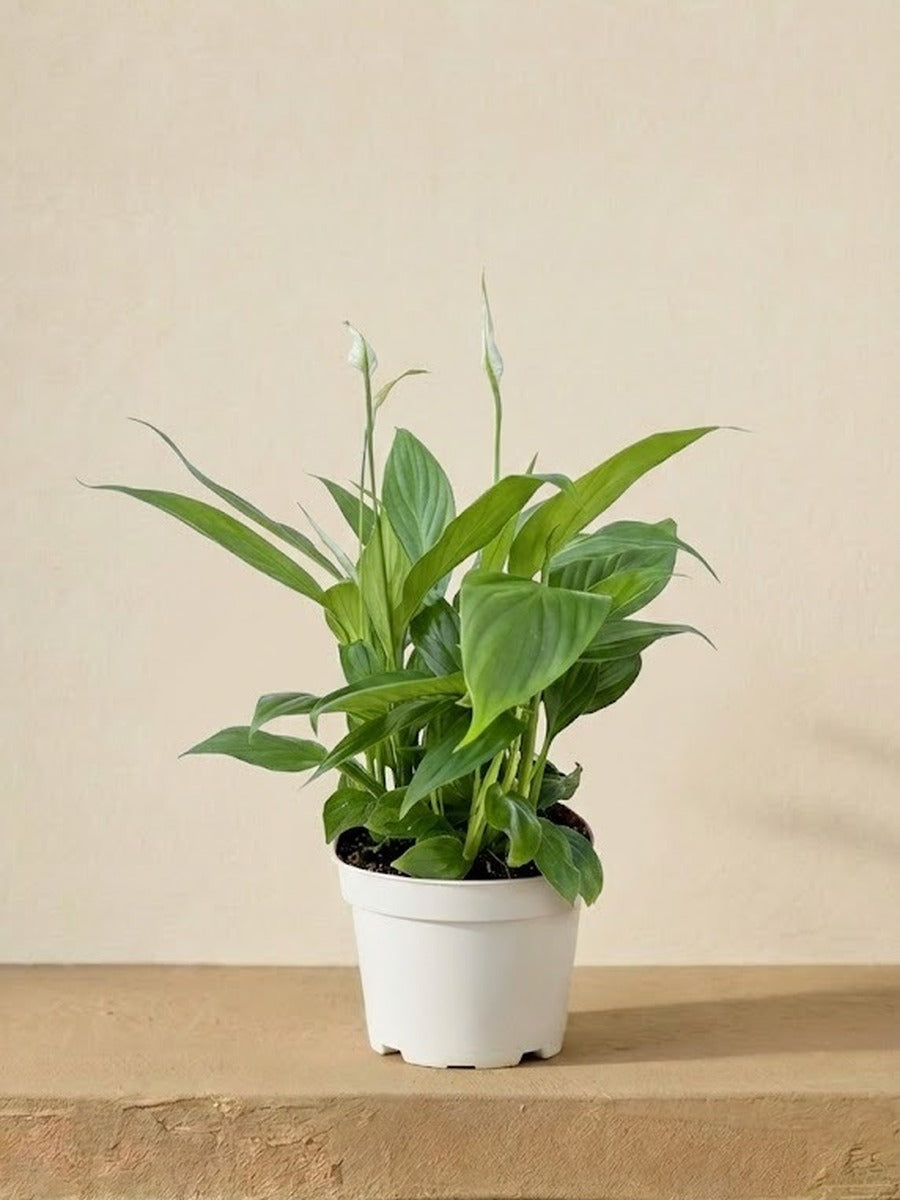
The Peace Lily (Spathiphyllum) is one of the most purchased indoor plants across Dubai and Abu Dhabi — bought as gifts, housewarming presents, and personal home additions by the tens of thousands every year. It is also one of the plants that generates the most care questions and the most disappointment from UAE owners who expected low maintenance and received something considerably more demanding.
The gap between expectation and reality is not random. It comes from five specific characteristics of the Peace Lily that are almost never communicated at the point of sale — and that are particularly relevant in the UAE's unique indoor environment. Understanding them before you buy saves weeks of confusion and prevents the progressive decline that claims so many Peace Lilies in UAE homes.
1. The Drooping Is Not What You Think — And Adding More Water Can Kill It
This is the most universally shared Peace Lily regret across UAE owners. The plant droops dramatically when it needs water — leaves hanging limply, the whole plant looking like it is on the verge of death. This drooping is genuinely alarming, and the natural response is to water immediately and generously.
The problem is that Peace Lily leaves also droop from overwatering — and the two look almost identical to the untrained eye. In UAE homes where AC-cooled soil dries far more slowly than outdoor heat suggests, the Peace Lily that appears to be desperately thirsty is frequently a plant sitting in soil that is still moist at root level, drooping not from drought but from root stress caused by the previous overwatering.
Watering a drooping Peace Lily without checking the soil first is one of the most common ways UAE owners accelerate its decline.
What to know before buying: Always check soil moisture at 3–4cm depth before responding to drooping. Push your finger into the soil — if there is any moisture at all, do not water. If the soil is completely dry at that depth, water thoroughly. The Peace Lily's drooping signal is reliable, but it tells you the plant wants checking — not that it automatically needs water. In UAE AC conditions, most Peace Lilies need water every 7–10 days in summer and every 10–14 days in winter — far less frequently than the alarming drooping might suggest.
2. UAE Tap Water Will Brown the Tips — Switch Immediately
This is the most overlooked pre-purchase fact for UAE Peace Lily buyers — and it is the cause of the most common Peace Lily complaint: brown, crispy leaf tips that appear despite apparently correct watering and care.
UAE tap water is desalinated seawater treated with fluoride, chlorine, and leaving significant dissolved mineral salts. The Peace Lily is highly sensitive to fluoride specifically — it absorbs it through the roots, accumulates it in leaf tissue, and responds with the characteristic brown tip damage that progresses along the leaf edge over time. This damage looks identical to low-humidity stress, making it difficult to identify without knowing the water quality issue.
Over months of tap water use, mineral salt buildup in the soil also progressively compromises root health — causing dehydration symptoms even when the soil is moist, further confusing the diagnosis.
What to know before buying: On the day you bring your Peace Lily home, stop using UAE tap water permanently. Switch to distilled water, reverse osmosis filtered water, or — the best free UAE option — collected AC condensate. Your air conditioning unit produces pure, mineral-free condensate water year-round. Collect it from your AC drain outlet and use it for all Peace Lily watering. This single change prevents the majority of brown tip problems UAE owners experience.
3. It Is Toxic to Cats, Dogs, and Children — Placement Matters
The Peace Lily is one of the most beautiful flowering indoor plants available — and one of the more toxic to pets and children. It contains calcium oxalate crystals throughout its leaves and stems that cause immediate oral burning, excessive drooling, vomiting, and swelling of the mouth and throat if ingested by cats, dogs, or young children.
This is not a mild advisory — the ASPCA lists Peace Lily as toxic to both cats and dogs, and veterinary clinics across Dubai receive Peace Lily ingestion cases regularly. In UAE homes where pets spend most of their time indoors due to extreme outdoor temperatures, the combination of curious cats, indoor plants, and toxic foliage creates a genuine risk that many buyers never consider until after purchase.
What to know before buying: If you have cats, dogs, or young children who might chew on plant leaves, either choose a genuinely pet-safe alternative — Spider Plants, Areca Palms, Calatheas — or plan a placement strategy that keeps the Peace Lily completely out of reach before purchase. Elevated positions on high shelves work for some pets but not for climbing cats. A dedicated plant room without pet access is the most reliable solution in UAE homes.
4. The White Flower Is Not Actually a Flower — And It Does Not Last
Most Peace Lily buyers purchase specifically for the elegant white flower — and many are surprised when it turns green within weeks and eventually brown, with no immediate replacement appearing. Understanding what that white structure actually is changes expectations entirely.
The white "flower" is technically a spathe — a modified leaf that surrounds the true flowers, which are the tiny yellow-white cluster on the central spike called the spadix. The spathe serves as an attractor for pollinators, not as a true flower petal. It naturally turns from white to green as it ages — this is a completely normal process, not a sign of poor health or care failure.
After the spathe greens and then browns, it should be removed by cutting the entire flower stalk at the base — not just the spathe itself. Leaving the stalk in place rots progressively and creates a pathway for bacterial infection into the plant's crown.
What to know before buying: Peace Lily flowers typically last 1–2 months before turning green and then brown. After removal, the next bloom cycle typically requires 6–12 months of good care — longer in UAE AC conditions where the slightly reduced light compared to the plant's natural habitat slows the energy accumulation needed for flowering. To encourage re-blooming, provide the brightest indirect light available and a brief reduction in watering frequency — a mild stress that mimics the seasonal dry period that triggers flowering in the plant's native habitat.
5. It Needs More Humidity Than UAE AC Air Provides — This Requires Active Management
The Peace Lily is frequently described as a low-maintenance, tolerant indoor plant — and in most of the world, that description is reasonably accurate. In UAE homes where air conditioning runs year-round and drops indoor humidity to 20–30%, this description requires significant qualification.
The Peace Lily evolved in the humid understory of tropical Central and South American rainforests — environments of 60–80% humidity. In a Dubai apartment, it is receiving a quarter to a third of the humidity it is adapted for. The visible result is the progressive brown tipping and edge damage that many UAE owners struggle with despite switching to distilled water, positioning correctly, and watering appropriately.
This is not a problem that resolves itself — it requires active, ongoing humidity management throughout ownership. And for UAE buyers who are not prepared to manage humidity consistently, the Peace Lily is genuinely the wrong plant choice regardless of how well everything else is done.
What to know before buying: Assess honestly whether you are prepared to maintain a pebble humidity tray, run a small room humidifier for several hours daily, and position the plant away from AC vents consistently. If the answer is yes — the Peace Lily rewards this investment with extraordinary beauty, reliable air purification, and periodic flowering that makes it one of the most satisfying indoor plants available in UAE homes.
Set up a pebble humidity tray using pebbles from GrowHub's gravel and pebbles collection from day one — fill a shallow tray with pebbles, add distilled water to just below the pebble surface, and place the pot on top. Combine with plant grouping and a small room humidifier targeting 50%+ RH for the most comprehensive humidity management.
The Peace Lily's Genuine Strengths — Worth the Effort
None of the above should discourage the right buyer from choosing a Peace Lily. For UAE owners who understand and manage its specific needs, it is genuinely one of the most rewarding indoor plants available. Its air-purifying credentials are documented by NASA's Clean Air Study — removing formaldehyde, benzene, trichloroethylene, and ammonia from sealed indoor air. Its elegant white flowers make a visual statement that few other commonly available indoor plants can match. Its dramatic drooping watering signal — understood correctly — makes it one of the most communicative plants you can own, eliminating the guesswork about when to water that confuses owners of other species.
It is not the carefree plant its "low maintenance" nursery tags suggest — especially in UAE conditions. But with the right knowledge and the right setup, it is absolutely worth owning.
🌿 Shop the Peace Lily at GrowHub — healthy, established plants delivered across Dubai and Abu Dhabi.
🪨 Shop pebbles for humidity trays — set up the essential humidity management your Peace Lily needs from day one in a UAE home.
🌱 Browse GrowHub's full indoor plants collection — hand-selected UAE-suited plants for every lifestyle and every home.
About GrowHub: GrowHub is the UAE's trusted online plant store delivering carefully selected houseplants, outdoor plants, accessories, and plant care products to homes and offices across Dubai, Abu Dhabi, and beyond. Free shipping on orders over AED 199.


