


Why Upright Leaves Matter for Snake Plants
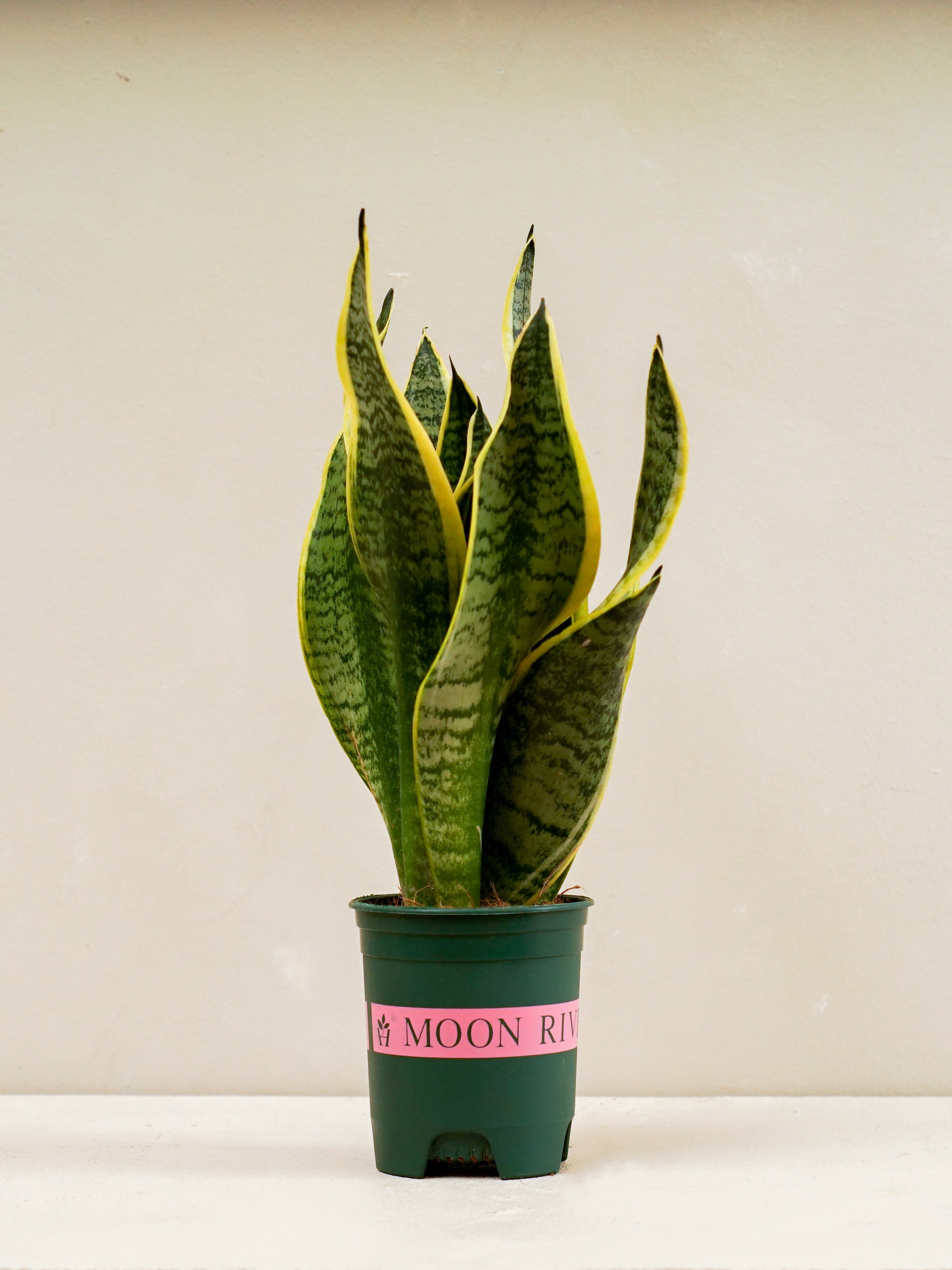
The Snake Plant (Sansevieria trifasciata) produces naturally rigid, upright leaves that can stay firmly erect for years in good conditions. This structural rigidity is not simply cosmetic — it is a biological indicator of the plant's overall health. The firm, turgid quality of healthy Snake Plant leaves comes from cells that are correctly hydrated, structurally sound, and receiving adequate light to maintain the photosynthetic activity that supports cell wall integrity.
When leaves begin bending — curving at the base, drooping at the tips, or falling completely sideways — one or more specific care factors have compromised this structural integrity. Identifying which factor is responsible leads directly to the correct fix, because different causes of bending require different responses.
Here are every cause and its precise solution.
Cause 1 — Overwatering (Most Common in UAE)
This is the most frequent cause of Snake Plant leaf bending in Dubai and Abu Dhabi homes — and it is directly linked to UAE's specific indoor environment. Overwatering causes the cells in the leaf base to become waterlogged and lose their structural integrity — the normally firm, rigid tissue becomes soft and unable to support the leaf's weight. A bending Snake Plant with soft, squishy leaf bases almost always indicates overwatering.
In UAE apartments, air conditioning dramatically slows soil evaporation — the same soil that dries within a few days in a naturally ventilated environment can stay damp for 10–14 days in an AC-cooled Dubai apartment. Plant owners who water on a fixed schedule create chronically wet conditions that gradually compromise the root system and cell structure of the leaves.
The fix: Stop watering immediately. Allow the soil to dry completely before the next watering — push your finger 5cm into the soil before every watering and only proceed if it is completely dry at that depth. For Snake Plants in UAE conditions, this typically means watering every 2–4 weeks in summer and every 4–6 weeks in winter. Check that the pot has drainage holes and the soil is a fast-draining succulent mix — heavy potting soil retains far too much moisture for Snake Plants.
Cause 2 — Insufficient Light
Snake Plants are famous for their low-light tolerance — but tolerating low light and thriving in low light are not the same thing. In dim conditions, the plant produces thinner, weaker leaves as it stretches toward available light. These thin-walled leaves lack the cellular density needed to stand upright — they bend and curve as they grow because their structural walls are simply not robust enough to support their own weight.
In UAE apartments with north-facing windows, interior rooms far from natural light, or positions blocked by furniture and curtains, this gradual structural weakening produces increasingly floppy leaves over several growth cycles. Each new leaf that emerges under low-light conditions is thinner and less structurally sound than the one before it.
The fix: Move the Snake Plant progressively closer to a bright, indirect light source — an east or west-facing window is ideal for UAE conditions. Do this gradually over 1–2 weeks to avoid light shock. In very dark rooms where natural light is genuinely inadequate, a dedicated LED grow light running 10–12 hours daily restores the cellular density and structural strength needed for fully upright leaves. New leaves emerging after the light improvement will grow in significantly more rigid than those produced in lower light.
Cause 3 — Root Bound Conditions
A Snake Plant that has completely filled its pot with roots is dealing with a compressed, stressed root environment that compromises its ability to uptake water and nutrients efficiently. This resource limitation manifests visibly in the leaves — they lose the turgidity that keeps them upright, and existing structurally sound leaves begin bending as the plant redirects limited resources away from leaf maintenance toward root management.
Signs of root binding alongside bending leaves include roots visibly emerging from drainage holes, soil drying out unusually fast after watering, and no new growth despite apparently correct care.
The fix: Repot in March or April — the beginning of UAE's growing season — into a container 2–3cm wider than the current pot, using a well-draining cactus and succulent potting mix. The combination of fresh soil nutrients and expanded root space typically produces noticeably more upright, robust new growth within one to two leaf cycles. After repotting, wait one week before watering to allow the root system to establish in the fresh mix.
Cause 4 — Physical Damage or Pressure
Snake Plant leaves can bend permanently if physical pressure is applied to them over time — being pressed against a wall, crowded by neighbouring plants, or simply positioned too close to a surface that the growing leaves eventually lean against. Unlike some plants that recover their shape after pressure is removed, Snake Plant leaves that have bent from physical contact often retain the curve permanently in the affected section.
Check whether any bending leaves are in contact with walls, windowsills, other pots, or decorative objects. In UAE apartments where plants are often placed in corners for aesthetic reasons, this type of pressure bending is genuinely common.
The fix: Reposition the plant to give every leaf adequate space to grow vertically without any contact with surrounding objects. For leaves that have already developed a permanent bend from physical pressure, trimming the affected leaf cleanly at the base is the most practical solution — the plant will produce a straight replacement leaf from the same root cluster.
Cause 5 — UAE Tap Water Mineral Damage
UAE tap water contains fluoride, chlorine, and dissolved mineral salts from the desalination process. Over time, these minerals accumulate in the leaf tissue of sensitive plants — and while the Snake Plant is more tolerant of UAE tap water than many other indoor plants, prolonged exposure to heavily mineralised water gradually compromises the health of individual leaf cells.
The result over many months of tap water use is leaves that develop soft patches, lose their firmness progressively, and eventually begin bending at the affected sections. This is a slower process than overwatering or light deficiency, but it is cumulative and worsens with each watering if the water source is not changed.
The fix: Switch to distilled water, reverse osmosis filtered water, or collected AC condensate immediately. UAE air conditioning units produce pure, mineral-free condensate water year-round — collect it from your AC drain outlet for free. Flush the existing soil thoroughly with distilled water every 2–3 months to remove accumulated mineral deposits from the root zone.
Cause 6 — Temperature Stress From AC Vents
Cold, dry airflow from AC vents causes rapid moisture loss from Snake Plant leaf surfaces — the leaves desiccate faster than the roots can replace moisture, causing the leaf tissue to lose turgor pressure and begin bending. This is most visible on the leaf faces directly exposed to the AC airflow, which often develop a slightly softer, less turgid texture before visible bending begins.
Snake Plants near AC vents in UAE homes are also prone to developing brown tips alongside the bending — the combination of both symptoms together usually points directly to vent proximity as the cause.
The fix: Move the plant at least one metre away from any active AC vent. Check this distance during UAE summer when AC units run at maximum capacity and airflow range is at its greatest. After repositioning, allow 2–4 weeks for the plant to stabilise — existing bent leaves will not straighten, but new leaves emerging in the improved position will grow in fully upright.
Can Bent Leaves Be Straightened?
The honest answer is: rarely, and only in specific cases. Leaves that have bent due to overwatering or root binding — where the cell structure is compromised by internal pressure rather than physical damage — may partially recover their upright posture if conditions are corrected early and the cellular damage is not severe. Providing a stake or soft tie to support the leaf while it recovers can help maintain position during the healing period.
Leaves that have permanently bent due to physical pressure, advanced overwatering damage, or light deficiency over a prolonged period will not meaningfully straighten regardless of care improvements. For these, trimming at the base is the practical solution — Snake Plants produce replacement leaves readily from healthy root clusters, and the new leaves emerging under corrected conditions will grow straight and upright.
Quick Diagnosis Guide
| Bending Pattern | Most Likely Cause |
|---|---|
| Soft, squishy base with wet soil | Overwatering — stop watering immediately |
| Thin, pale, gradually bending new growth | Insufficient light — move to brighter position |
| All leaves bending with roots at drainage holes | Root bound — repot into fresh soil |
| Bending on side facing wall or object | Physical pressure — reposition plant |
| Soft patches on leaves, brown tips also present | UAE tap water mineral damage — switch water |
| Bending on vent-facing side only | AC vent exposure — move away from vent |
🌿 Shop the Snake Plant at GrowHub — healthy, upright Snake Plants delivered across Dubai and Abu Dhabi.
🪨 Shop pebbles for top dressing — improve drainage, prevent overwatering, and give your Snake Plant display a polished, professional finish.
🌱 Browse GrowHub's full indoor plants collection — hand-selected UAE-suited plants delivered fresh to your door.
About GrowHub: GrowHub is the UAE's trusted online plant store delivering carefully selected houseplants, outdoor plants, accessories, and plant care products to homes and offices across Dubai, Abu Dhabi, and beyond. Free shipping on orders over AED 199.


