


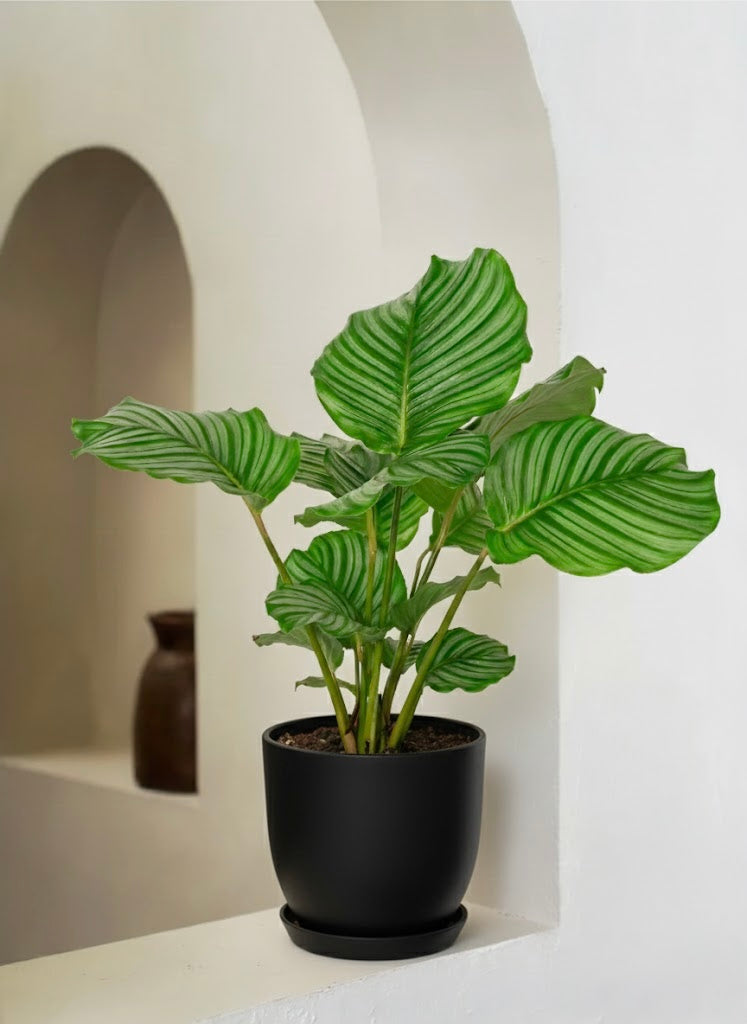
The Calathea orbifolia is the undisputed royalty of the prayer plant world. With its oversized, orbicular leaves adorned with metallic silver stripes, it is a masterclass in botanical geometry. However, as any collector of rare indoor plants will tell you, this beauty comes with a temperament to match. It is a plant that thrives on consistency, and nothing disrupts consistency quite like a repotting session.
In the houseplant community, the "dreaded transplant shock" is a well-known phenomenon, particularly with the Calathea genus. One day your plant is a lush, vibrant centerpiece; the next, it is a drooping, crispy-edged shadow of its former self simply because its roots were moved. If you are wondering when to repot Calathea orbifolia and—more importantly—how to do it without killing it, this comprehensive guide will walk you through every critical step.
The Golden Rule: Don't Repot Unless Necessary
Before we look into the "how," we must address the "when." Unlike a Pothos or a Philodendron, which might enjoy a fresh pot every spring, the Calathea orbifolia prefers to be slightly root-bound. Its root system is delicate and sensitive to the sudden influx of air and changes in soil chemistry.
You should only consider repotting your Calathea orbifolia if you see the following "Red Alert" signs:
- Roots Escaping: Roots are visibly growing out of the bottom drainage holes.
- Water Runs Straight Through: When you water, the liquid pours out the bottom immediately because there is more root mass than soil left to absorb it.
- Stunted Growth: It is the middle of the growing season, but the plant hasn't produced a new leaf in months despite perfect light and humidity.
- Salt Buildup: The soil has a white, crusty film on top that cannot be scraped away, indicating a dangerous level of mineral buildup from tap water.
Typically, a healthy Calathea orbifolia only needs a new home every 18 to 24 months.
Timing is Everything: The Seasonal Window
If you have determined that your plant is indeed root-bound, the next step is choosing the right time of year. Repotting in the dead of winter is a recipe for disaster. During the shorter, cooler days, the plant’s metabolism slows down significantly. If you disturb the roots during this "sleep" phase, the plant won't have the energy to repair the microscopic damage caused by the move.
The ideal window is Early Spring (March to April). This aligns with the plant’s natural surge in growth. When the roots are placed in fresh soil during the spring, they are chemically "primed" to expand and colonize the new medium, which significantly reduces the duration of any potential transplant shock.
7 Essential Steps to Avoiding Transplant Shock
1. Hydrate Before the Operation
Never repot a thirsty Calathea orbifolia. A dehydrated plant is already in a state of stress. Twenty-four hours before you plan to repot, give your plant a thorough watering with filtered or distilled water. This ensures the cells are turgid (full of water) and the roots are flexible rather than brittle. Pliable roots are much less likely to snap during the transition.
2. Choose the "One Size Up" Rule
One of the most common mistakes with rare indoor plants is moving them into a pot that is too large. This is known as "over-potting."
- The Risk: A giant pot holds a massive amount of soil. If the root ball is small, it cannot drink all the water held in that extra soil. The result? The soil stays soggy for weeks, leading to root rot.
- The Solution: Only move up 1 to 2 inches in diameter from the current pot. If your Orbifolia is in a 6-inch pot, move it to a 7 or 8-inch pot maximum.
3. The "Aroid-Lite" Soil Recipe
Calathea orbifolia needs a soil that mimics the forest floor—rich in organic matter but extremely well-draining. Standard "all-purpose" potting soil is too dense and will suffocate the roots.
For the best results, mix your own:
- 50% High-quality Peat Moss or Coco Coir: For moisture retention and acidity.
- 20% Perlite: For drainage.
- 20% Orchid Bark: To create those essential air pockets.
- 10% Worm Castings: For a gentle, organic nutrient boost.
4. Be a "Root Whisperer"
When you remove the plant from its old pot, resist the urge to vigorously shake out the old soil or "tease" the roots. Calathea roots are covered in tiny, invisible root hairs that do the actual work of absorbing water. Ripping these hairs is the primary cause of transplant shock.
Simply turn the pot sideways, squeeze the sides to loosen the root ball, and let it slide out. If some old soil falls away, that’s fine, but do not force it. Keep the central root mass as intact as possible.
5. Mind the Depth
When placing the Orbifolia into its new container, pay close attention to the "soil line." You should never bury the plant deeper than it was in its original pot. The stems (petioles) of a Calathea are sensitive; burying them too deep can lead to stem rot, where the leaves turn mushy and fall off at the base.
6. Use the "Filtered Water" Only Policy
After repotting, give the plant a gentle watering to settle the soil around the roots. However, this is the time to be extra strict about water quality. Calathea orbifolia is notoriously sensitive to chlorine, fluoride, and heavy metals found in tap water. These chemicals can burn the newly disturbed roots. Use distilled, rain, or reverse-osmosis water for at least the first month after repotting.
7. The "Recovery Suite" Environment
Once the repotting is done, do not put the plant back in its usual spot if that spot is near a window with bright light. For the next 7 to 10 days, move your Orbifolia to a slightly dimmer area with ultra-high humidity.
- Why? The roots aren't fully functional yet. By lowering the light and raising the humidity, you reduce the plant's need to "work," allowing it to focus 100% of its energy on root repair.
Recognizing and Managing Shock
Even with perfect technique, your Calathea orbifolia might still show signs of "the sulks." It is important to distinguish between minor adjustment and a terminal decline.
Normal Adjustment Signs:
- Slight drooping of the leaves for 48 hours.
- The "Prayer Motion" (leaves moving up at night and down during the day) slows down or stops temporarily.
- One or two of the oldest, smallest leaves at the bottom turn yellow.
Emergency Signs (Action Required):
- Extreme leaf curling: The leaves roll up into tight "cigars." This means the plant is losing water faster than it can take it in. Immediately place a clear plastic bag over the plant to create a temporary greenhouse.
- Sudden brown spotting: This could indicate the new soil is too "hot" (too much fertilizer) or the water quality is poor.
Summary: Repotting Checklist
|
Action |
Why it matters |
|
Check for Roots |
Prevents unnecessary stress to the plant. |
|
Spring Timing |
Leverages the plant's natural energy surge. |
|
Pre-Watering |
Keeps roots flexible and hydrated. |
|
Chunky Soil Mix |
Prevents root suffocation and rot. |
|
Minimal Disturbance |
Protects delicate root hairs. |
|
High Humidity Recovery |
Reduces the "workload" on new roots. |
The Ultimate Goal: A Thriving Masterpiece
Repotting a Calathea orbifolia doesn't have to be a gamble. By treating it as a surgical procedure rather than a chore, you can ensure that your plant continues to produce those massive, silver-streaked leaves that make it a standout among rare indoor plants.
Remember: Patience is your best tool. If you aren't sure if it needs a new pot, wait another six months. In the world of Calatheas, it is almost always better to be a month late than a month early. Once the transition is successful, you'll be rewarded with a flush of new growth that will make all the careful preparation worth it.
