


Spider plants (Chlorophytum comosum) have a well-deserved reputation as one of the most forgiving houseplants in the world. They survive low light, irregular watering, cramped pots, and even occasional complete neglect. Yet plant owners across the UAE are constantly puzzled by the same frustrating problem: brown, dried-out leaf tips that simply will not go away — no matter how carefully they water.
The culprit in most cases is not overwatering, not underwatering, and not the wrong pot. It's fluoride — an invisible chemical added to municipal water supplies — and it's slowly damaging your spider plant one watering session at a time. Understanding this problem is the first step to growing a truly lush, healthy spider plant indoors.
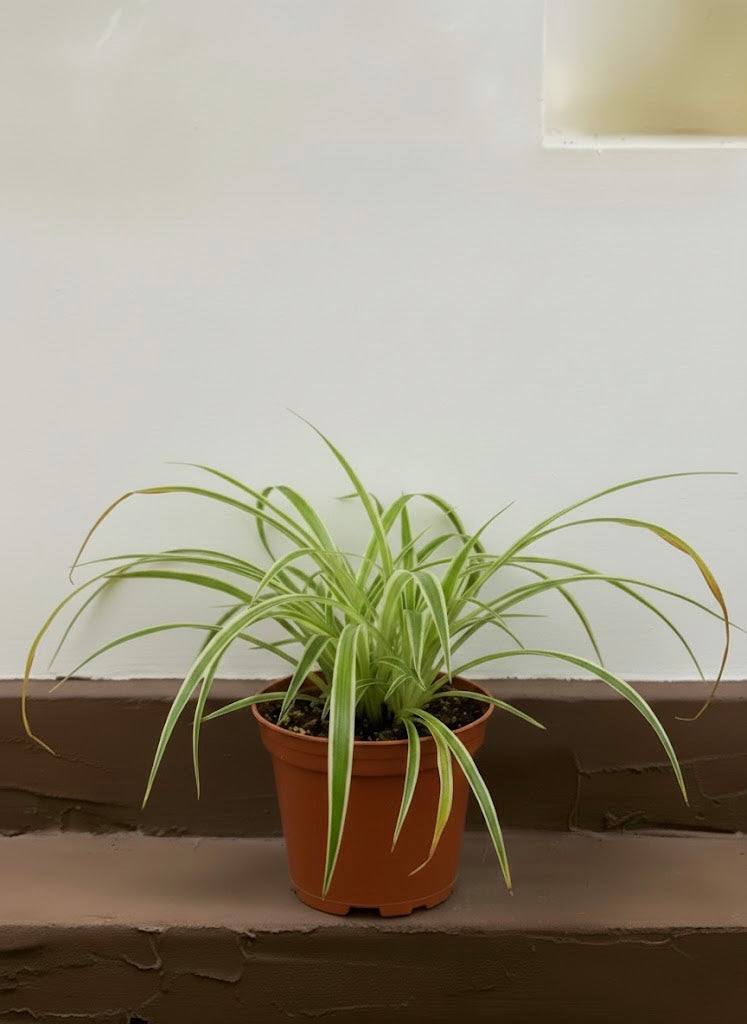
What Is Fluoride Toxicity in Plants?
Fluoride is a naturally occurring mineral routinely added to public drinking water at low concentrations for dental health. While these levels are considered safe for humans, many tropical houseplants — and spider plants in particular — are extremely sensitive to even small amounts of dissolved fluoride in their growing medium.
When you water your spider plant with fluoride-containing tap water, the plant absorbs the chemical through its root system along with water and nutrients. Unlike other minerals that cycle through the plant's metabolic processes, fluoride is not metabolised or excreted. Instead, it travels upward through the plant's vascular system and accumulates at the tips and margins of the leaves — precisely where water evaporates most rapidly. Over time, this concentrated fluoride causes cellular damage, killing the tissue and producing the characteristic brown, crispy tips that alarm so many plant owners.
⚠️ Important: Fluoride damage is irreversible. Once leaf tips turn brown and dry, they will not recover. The goal is to stop further damage and allow new, healthy growth to emerge.
Why Spider Plants Are Especially Vulnerable
Not all houseplants react equally to fluoride. Spider plants (Chlorophytum comosum) are classified as fluoride-sensitive plants, meaning they show toxic symptoms at lower concentrations than most other species. This is not a rare or unusual problem — it is so well-documented that it appears directly in the botanical description of the species: Chlorophytum comosum "can be sensitive to the fluoride in tap water, which commonly gives it burnt tips."
Other sensitive houseplants include Dracaena, Peace Lily, and Prayer Plants, but spider plants tend to show symptoms faster and more dramatically than most.
The UAE Tap Water Factor
For plant owners in the UAE, this problem is compounded by a unique regional factor: the nature of the municipal water supply itself. The UAE's drinking water is primarily sourced from desalinated seawater, which goes through extensive chemical treatment before reaching homes and apartments. The resulting supply tends to have:
- Added fluoride — for dental health, as per treatment standards
- High total dissolved solids (TDS) — residual salts from the desalination process
- Chlorine or chloramine — used as a disinfectant
- Higher pH levels — slightly alkaline compared to natural rainwater
All of these factors combine to create water that is noticeably harsher on fluoride-sensitive plants than the natural rainwater spider plants evolved with in their native South Africa. For UAE plant owners, switching away from tap water is not just helpful — it is genuinely important for long-term plant health.
How to Identify Fluoride Damage vs. Other Problems
| Symptom | Likely Cause |
|---|---|
| Brown, crispy tips only — green midleaf | Fluoride toxicity or low humidity |
| Yellowing leaves all over | Overwatering or root rot |
| Brown tips + pale, washed-out colour | Too much direct sunlight |
| Brown tips + soggy soil | Overwatering — check roots for rot |
| Uniform browning across the whole leaf | Sunscorch or severe underwatering |
| Brown tips despite proper watering and light | Almost certainly fluoride or salt buildup |
If your spider plant is otherwise healthy — good colour, producing spiderettes, active growth — but consistently shows brown tips, fluoride is almost certainly the primary cause.
The Role of Salt Buildup
Fluoride is not the only mineral villain in tap water. Over repeated waterings, dissolved salts accumulate in the potting soil, gradually raising concentrations to toxic levels. You may notice a white crusty residue forming on the soil surface or around drainage holes — this is a visible sign of salt buildup.
High soil salt concentration draws water out of plant roots through osmosis, causing dehydration stress even when the soil appears moist. Combined with fluoride accumulation at the leaf tips, salt buildup can cause more extensive browning and stunted growth over time.
💡 Pro Tip — Flushing your soil: Every 2–3 months, water your spider plant very heavily — much more than usual — until water drains freely from the bottom for several minutes. This "flushing" technique washes accumulated salts out of the root zone and resets the soil's mineral balance. Always use distilled or filtered water when flushing.
The Best Water Alternatives for Your Spider Plant
1. Distilled Water
Distilled water is the gold standard for fluoride-sensitive plants. The distillation process removes virtually all dissolved minerals, including fluoride, chlorine, and salts. It is widely available in UAE supermarkets in large refillable bottles and is affordable relative to the cost of a damaged plant. For plant owners with multiple sensitive houseplants, this is the recommended long-term solution.
2. Reverse Osmosis (RO) Filtered Water
A reverse osmosis filtration system — either under-sink or countertop — removes fluoride and other dissolved solids very effectively. Many UAE homes already have RO filters installed. If yours does, this water is excellent for your spider plant at zero additional cost. A quality RO system removes 90–99% of dissolved fluoride.
3. Rainwater or AC Condensate
Collected rainwater is naturally fluoride-free, soft, and slightly acidic — closely matching the water spider plants receive in their native South African habitat. While UAE rainfall is limited, air conditioning condensate is an outstanding alternative. AC condensate is essentially distilled water extracted from humid air — perfectly safe and completely free for UAE plant owners to collect year-round from their AC drain lines.
4. Tap Water Left to Stand Overnight
Leaving tap water in an open container for 24 hours allows chlorine — a volatile compound — to evaporate, which reduces chlorine stress on roots. However, this method does not remove fluoride. Fluoride is a stable dissolved mineral that remains fully in the water regardless of how long it sits. This technique offers only a partial benefit and will not solve the fluoride problem on its own.
5. Bottled Spring Water (Use with Caution)
Some bottled spring waters contain naturally occurring fluoride and significant mineral content. Always check the label — look for near-zero fluoride content and a low TDS reading. Purified or distilled bottled water is consistently safer than spring water for this purpose.
Watering Habits That Reduce Fluoride Buildup
Even when using better water, the way you water affects how quickly minerals accumulate. Follow these habits consistently:
- Water thoroughly, not frequently. Give a deep drink until water flows from the drainage holes, then allow the top inch of soil to dry before the next watering. Shallow, frequent watering concentrates minerals in the upper root zone.
- Never let your plant sit in standing water. Empty the saucer after every watering. Reabsorbing stagnant saucer water concentrates whatever minerals were originally in it.
- Always use pots with drainage holes. Poor drainage traps mineral-rich water in the root zone.
- Flush the soil quarterly to prevent long-term mineral accumulation.
Soil and Fertiliser: Other Fluoride Sources to Watch
Superphosphate Fertilisers
Some fertilisers — particularly those containing superphosphate — carry naturally occurring fluoride as a contaminant from the phosphate rock used in their production. For fluoride-sensitive plants, avoid fertilisers listing superphosphate as an ingredient. Choose a balanced, water-soluble liquid fertiliser (e.g., 20-20-20 NPK) applied at half the recommended concentration, once a month during the growing season only (approximately March to October in the UAE).
⚠️ Note: Over-fertilising is itself a direct cause of brown tips. Heavy fertiliser applications raise soil salt levels dramatically. Less is always more with spider plants — they are naturally light feeders.
Perlite in Potting Mix
Standard perlite — the white granules commonly added to potting soil for drainage — contains trace fluoride that can leach into the soil over time. While the contribution is minor compared to tap water, sensitive plants in small pots may be affected. A dedicated tropical plant potting mix or one using vermiculite instead of perlite is the marginally safer long-term choice.
Can You Reverse Brown Tips?
Unfortunately, no. Fluoride damage to leaf tissue is permanent — the affected cells are dead and will not regenerate. However, trimming the brown tips significantly improves the plant's appearance and redirects energy toward healthy new growth.
Use clean, sharp scissors and cut at a slight angle, following the natural pointed shape of the leaf. Trim only the brown portion, leaving the healthy green tissue intact. After switching to fluoride-free water, new leaves will grow in clean and tip-free.
💡 Trimming Tip: Cut at a gentle diagonal that mirrors the leaf's natural taper. This looks far more natural than a blunt straight cut and is barely noticeable on a healthy, growing plant.
Other UAE-Specific Factors That Worsen Brown Tips
Water quality is the primary cause, but these environmental factors common in UAE homes compound the problem:
- Low humidity from air conditioning. UAE air conditioning often drops indoor humidity below 30%. Spider plants prefer 40–60% humidity. In dry conditions, leaf tips desiccate faster, worsening existing fluoride damage. A small humidifier or a water-filled pebble tray near the plant makes a real difference.
- Direct sun exposure. Spider plants need bright, indirect light. In the UAE's intense climate, even brief direct sun through a south or west-facing window can scorch leaf tips.
- Proximity to A/C vents. Constant dry, moving air from vents desiccates leaf tips rapidly. Keep your spider plant at least 1–2 metres from any active vents.
- Pots that are too large. Oversized pots hold excess moisture and concentrate minerals without efficient drainage, speeding up fluoride and salt buildup.
Complete Action Plan: Fix Fluoride Damage Step by Step
- Stop using tap water immediately. Switch to distilled, RO-filtered, or AC condensate water starting with your next watering.
- Flush the existing soil. Water heavily with distilled water, allowing it to drain completely multiple times, to wash out accumulated fluoride and salts.
- Trim existing brown tips. Use clean scissors to cut at a gentle angle. This improves appearance and removes dead tissue.
- Review your fertiliser. Switch to a balanced liquid fertiliser free of superphosphate, applied at half strength once monthly during the growing season only.
- Optimise placement. Bright, indirect light — away from direct sun and A/C vents.
- Address humidity. Introduce a humidifier or pebble tray if indoor air is very dry.
- Be patient. New leaves growing after these changes will come in clean and healthy. Full visual recovery takes several weeks to months as older damaged leaves are gradually replaced.
Frequently Asked Questions
Q: Can I use bottled mineral water for my spider plant? It depends on the brand. Check the label for fluoride and TDS content. High-mineral spring waters can still contain significant fluoride. Purified or distilled bottled water is the consistently safer choice.
Q: Does boiling tap water remove fluoride? No — it actually makes the problem worse. Boiling removes chlorine (volatile) but concentrates fluoride in the remaining water as some water boils away. Never boil tap water as a fluoride solution for plants.
Q: My spider plant still has brown tips even though I use a filter. Why? Standard carbon filters — including most pitcher and fridge filters — remove chlorine effectively but do not remove fluoride. Only reverse osmosis systems, distillation, or activated alumina filters reliably eliminate fluoride. Verify the type of system you are using.
Q: Will repotting into fresh soil help? Yes, partially. Repotting removes fluoride-laden old soil and gives roots a fresh mineral-free start. However, if tap water use continues, fluoride will accumulate again. Repotting works best as part of a complete care reset combined with switching to fluoride-free water.
Q: Are some spider plant varieties more resistant to fluoride than others? No. All Chlorophytum comosum cultivars — 'Vittatum', 'Variegatum', 'Bonnie', and others — share the same fluoride sensitivity as a species-level characteristic. No commercial variety has been bred for fluoride tolerance.
Q: How often should I flush my spider plant's soil? Every 2 to 3 months. If you have been using UAE tap water for a long time, start with an immediate thorough flush before switching to better water, then maintain the quarterly routine.
Final Thoughts
Spider plants are genuinely tough, adaptable, and rewarding to grow — but they have one well-documented weakness: fluoride. In a city like Dubai or Abu Dhabi, where tap water is chemically treated desalinated water, fluoride toxicity is practically inevitable if you water straight from the tap.
The good news is that the fix is simple, affordable, and permanent. Switching to distilled or RO-filtered water, flushing your soil periodically, and trimming existing damage will transform your spider plant's appearance within weeks. New growth will emerge clean, vibrant, and tip-free — the healthy, cascading spider plant you envisioned when you first brought it home.
Take care of the water quality, and your spider plant will take care of the rest.
👉 Browse the Spider Plant (Chlorophytum Variegatum) at GrowHub and bring home a beautiful plant ready to thrive in your UAE home.
