


Calathea Orbifolia is one of the most striking indoor plants, known for its large, round leaves with elegant silver-green stripes. While it adds a luxurious tropical feel to any space, it is also known to be sensitive—especially when it comes to light.
Many plant owners struggle to find the right balance. Too little light slows growth and dulls the leaves, while too much light can cause leaf burn, browning, and curling. Understanding the correct light conditions is the key to keeping your Calathea Orbifolia healthy and vibrant.
In this guide, you’ll learn exactly how much light Calathea Orbifolia needs, how to avoid leaf burn, and how to optimize placement for best results indoors.
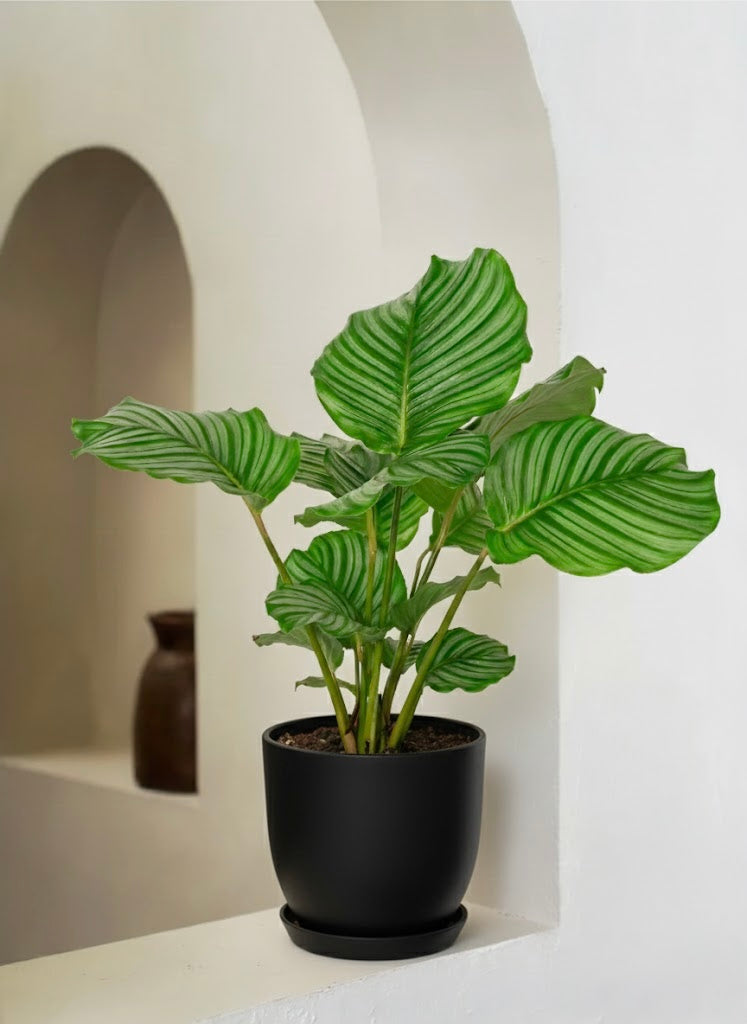
Understanding Calathea Orbifolia’s Natural Light Environment
Calathea Orbifolia originates from tropical forests where it grows under a canopy of trees.
This means it naturally receives:
- Filtered light
- Soft, indirect sunlight
- Protection from direct sun rays
Because of this, it is not adapted to harsh sunlight. Instead, it thrives in gentle, diffused lighting conditions similar to its natural habitat.
Ideal Light for Calathea Orbifolia Indoors
The best type of light for Calathea Orbifolia is bright, indirect light.
This means:
- Plenty of light in the room
- No direct sun hitting the leaves
- Light filtered through curtains or walls
A good placement is near a window where sunlight is present but softened.
Best Window Directions for Placement
Window direction plays an important role in light quality.
East-facing windows
Provide gentle morning light, which is ideal for Calathea Orbifolia.
North-facing windows
Offer consistent, soft light throughout the day, making them perfect for stable growth.
South-facing windows
Can work if the plant is placed a few feet away or behind sheer curtains.
West-facing windows
Produce strong afternoon light, which can be too harsh and may cause leaf burn if not filtered.
How Far Should You Place It From the Window?
Distance from the window affects light intensity.
- 1–2 meters away from bright windows is ideal
- Directly on the windowsill may be too strong (depending on direction)
- Too far from the window reduces growth
If you notice fading or slow growth, move it slightly closer. If leaves start browning, move it further away.
Signs Your Calathea Orbifolia Is Getting Too Much Light
Excess light is one of the biggest problems for this plant.
Watch for these signs:
- Brown or crispy edges
- Faded leaf color
- Yellow patches
- Curling leaves
- Dry spots on leaf surface
These symptoms indicate leaf burn, which happens when the plant is exposed to direct or intense light.
How to Prevent Leaf Burn
Avoiding leaf burn is simple with the right adjustments.
- Use sheer curtains to filter sunlight
- Move the plant away from direct sun
- Avoid placing near glass windows with strong heat
- Keep it out of direct afternoon sunlight
Even small changes in placement can prevent long-term damage.
Signs Your Plant Is Not Getting Enough Light
While too much light is harmful, too little light also causes problems.
Common signs include:
- Slow or no growth
- Smaller new leaves
- Dull or faded appearance
- Weak stems
In low light, the plant survives but does not thrive.
How to Improve Light Without Causing Stress
If your home has limited natural light, there are simple ways to improve conditions.
- Move the plant closer to a window
- Place near light-colored walls to reflect light
- Rotate the plant regularly for even exposure
- Use filtered light instead of direct exposure
These adjustments help maintain balance.
Can Calathea Orbifolia Grow in Low Light?
Yes, but with limitations.
Calathea Orbifolia can tolerate low light conditions, which is why it is popular among indoor plants. However:
- Growth will slow down
- Leaves may become smaller
- Colors may lose vibrancy
For best results, aim for moderate to bright indirect light.
Using Artificial Light for Calathea Orbifolia
If natural light is not sufficient, artificial lighting can help.
Use:
- Full-spectrum LED grow lights
- Place light 30–50 cm above the plant
- Keep lights on for 8–10 hours daily
This is especially useful in apartments or rooms with limited sunlight.
How AC Rooms Affect Light and Leaf Health
In air-conditioned homes, light and humidity work together.
Even if light is correct, dry air can worsen leaf burn symptoms.
To support your plant:
- Avoid placing it near AC vents
- Maintain moderate humidity
- Combine proper lighting with stable environment
Balanced conditions prevent stress.
Best Placement Tips for Healthy Growth
For optimal results, place your Calathea Orbifolia in:
- Bright rooms with filtered sunlight
- Areas with stable temperature
- Locations away from direct airflow
- Spots with moderate humidity
Consistency is more important than perfection.
Common Light Mistakes to Avoid
Many beginners unknowingly damage their plants by:
- Placing them in direct sunlight
- Keeping them too far from windows
- Ignoring window direction
- Moving plants too frequently
Avoiding these mistakes improves plant health quickly.
How to Know You’ve Found the Perfect Spot
Your plant will show clear signs when light conditions are ideal:
- Leaves remain large and vibrant
- No brown edges or burn marks
- Consistent new growth
- Upright, healthy structure
These are indicators of a balanced environment.
Final Thoughts
Calathea Orbifolia is not difficult to care for—it simply requires the right light balance. Too much light leads to leaf burn, while too little slows growth. By providing bright, indirect light and avoiding harsh sunlight, you can maintain healthy, vibrant foliage.
The key takeaway is simple:
Soft light is the secret to healthy Calathea Orbifolia.
Once you find the right placement, your plant will thrive and reward you with stunning, lush leaves that elevate your indoor space.
)