



In the high-stakes world of indoor plants, 2026 has brought a technological revolution that even the most seasoned "green thumbs" are embracing. We have moved past the era of guessing if a leaf is yellowing due to overwatering or a nitrogen deficiency. Today, Artificial Intelligence (AI) has stepped into the garden, transforming how we identify, diagnose, and sustain our most prized botanical investments.
For those curating a collection of rare indoor plants, where a single specimen can cost as much as a designer handbag, these AI advancements are not just "cool apps"—they are essential insurance policies.

1. Beyond Basic Identification: The 2026 AI Standard
In 2025, plant apps were essentially digital encyclopedias. You snapped a photo, and the app gave you a name. In 2026, the technology has evolved into Multi-Modal AI Engines. Leading apps like Plantify, PlantIn, and Planta now boast identification accuracies exceeding 98% for over 600,000 species.
- Environmental Contextualization: Modern AI doesn't just look at the leaf; it analyzes the background. It detects the pot size, the intensity of light in the room, and even the ambient humidity via integrated local weather data.
- The "Quick Add" Revolution: Apps like Planta now feature "Quick Add" scans. One panoramic sweep of your shelf can identify every plant in the shot, automatically tagging each one and setting up a unified care schedule.
2. Protecting Your Investment: AI for Rare Indoor Plants
If you own a Monstera Thai Constellation or a Philodendron Spiritus Sancti, you know that their needs are highly specific. AI is currently bridging the gap between "hobbyist" and "expert" for these high-value species.
- Variegation Stability Tracking: AI can now monitor the "health" of variegation. By comparing photos over time, the AI can alert you if your rare indoor plants are beginning to revert to plain green. It can then suggest immediate lighting adjustments to "save" the variegation before it's lost.
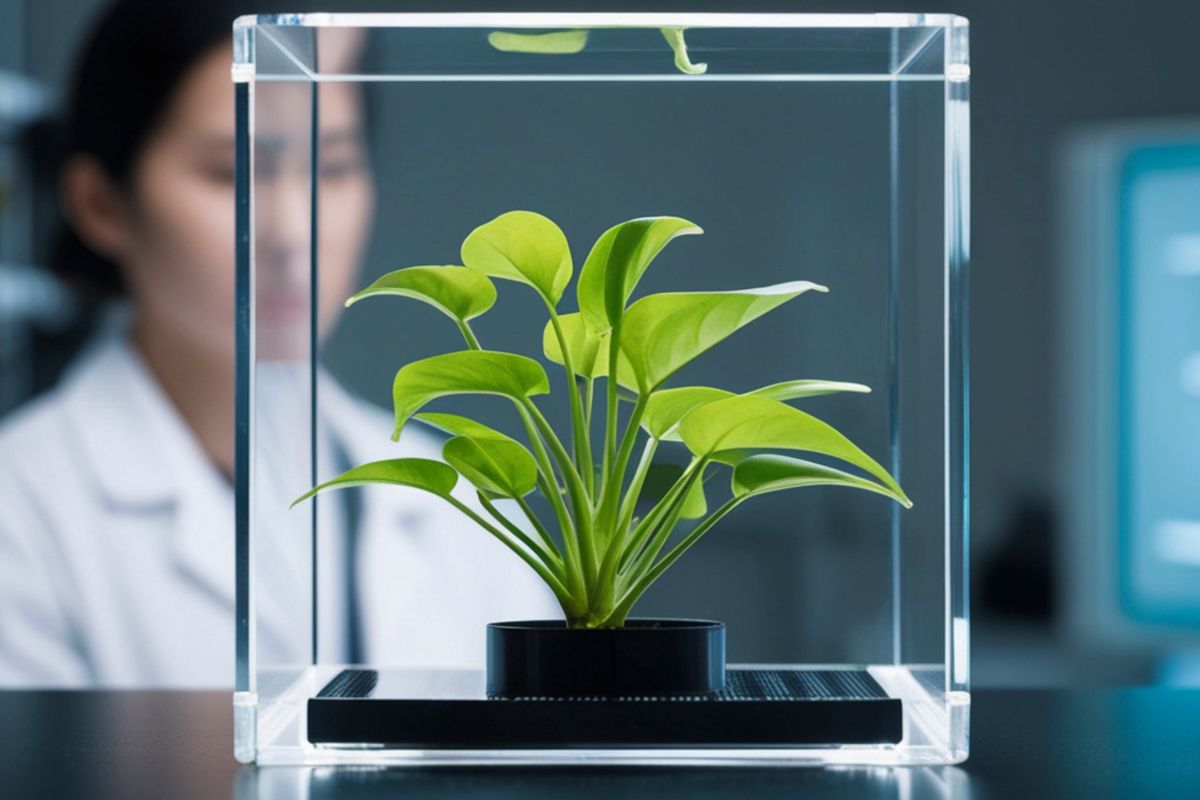
- Tissue Culture Diagnostics: With more rare indoor plants entering the market via tissue culture, AI tools are being used to track the acclimation process. It can detect the subtle signs of "melting" or fungal rot in ex-agar plantlets that the human eye might miss until it's too late.
3. The "Dr. Planta" Era: Real-Time Disease Diagnosis
The most significant breakthrough in 2026 is the use of Convolutional Neural Networks (CNNs) for real-time pathology.
Rather than a static "it looks like this" diagnosis, AI now performs Predictive Symptom Analysis. By analyzing the specific pattern of a brown spot, the AI can distinguish between Bacterial Leaf Spot and simple Sun Scorch with clinical precision.
2026 Feature Highlight: Apps like Agrio and Plantix now provide a "Heat Map" of your plant’s health. By scanning the foliage, the AI highlights areas of high-stress or early-stage pest infestations (like spider mite webbing) before they become visible to the naked eye.
4. Smart Home Integration: The "Internet of Plants"
The "Garden of 2026" is no longer a standalone hobby; it is a node in your smart home ecosystem.
- The Universal AI Plant Engine: New hardware like the LeafyPod (unveiled at CES 2026) uses a "Universal AI Engine" that connects your plants to your smart blinds and humidifiers. If the AI detects your Alocasia Regal Shield is getting too much direct afternoon sun, it can automatically lower your smart shades.
- Voice-Activated Care: "Alexa, how thirsty is the Monstera?" Integration with Siri, Alexa, and Google Assistant allows for hands-free status checks. The AI pulls data from soil sensors and growth history to give you a verbal "wellness report."
5. Community Science & The Global Database
When you use an AI app to identify indoor plants, you aren't just helping yourself; you're contributing to global biodiversity data.
- Citizen Science: Apps like iNaturalist and PlantNet feed your scans into a global database used by researchers to track how indoor microclimates affect plant evolution.
- Blockchain Traceability: For the high-end rare indoor plants market, AI is being paired with blockchain. This allows a buyer to scan a plant and see its entire "pedigree"—from the lab it was birthed in to its previous owners and health history.
Comparative Table: Top AI Plant Apps of 2026
|
App Name |
Best For |
Key AI Feature |
|
Planta |
Complete Care |
"Quick Add" AI Room Scanning |
|
PlantIn |
Rare Specimens |
100% Accuracy & Botanist Consults |
|
PictureThis |
Diagnosis |
Advanced Disease "Heat Maps" |
|
LeafyPod |
Automation |
Adaptive AI Smart-Planter Integration |
|
iNaturalist |
Education |
Global Biodiversity Contribution |
The "Newbie" to "Pro" Pipeline
The beauty of AI in the garden is that it lowers the "barrier to entry." In the past, people avoided rare indoor plants out of fear of killing them. Today, AI acts as a 24/7 personal tutor. It tells you when to fertilize, when to repot, and exactly how much light that Anthurium Warocqueanum actually needs.
Final Verdict for 2026
AI isn't replacing the "soul" of gardening; it's removing the frustration. By handling the data-heavy tasks of monitoring and diagnosis, AI allows plant parents to spend less time worrying and more time enjoying the aesthetic and mental health benefits of their indoor plants.
Whether you're a casual owner of a Snake Plant or a dedicated hunter of rare indoor plants, the smartphone in your pocket is now the most powerful tool in your gardening kit.


Leave a comment
This site is protected by hCaptcha and the hCaptcha Privacy Policy and Terms of Service apply.